Power for Persistent Drone Operations
Keeping drones operating in the field depends on more than the aircraft themselves. Teams also need a reliable power, off-grid drone charging, autonomous launch and recovery, and a way to prepare aircraft for repeated missions, especially in remote locations where grid access and fuel resupply may be limited.
The Persistent Drone Operations Nanogrid brings those functions together in one Made-in-USA mobile system. Developed by Sesame Solar, Target Arm and AG3 Labs, it combines off-grid power, autonomous drone launch and recovery, and configurable unmanned aircraft, and the charging infrastructure needed to support extended UAS operations in remote and forward environments.
For organizations evaluating drone-in-a-box systems, drone docking stations, or mobile drone docks, the Persistent Drone Operations Nanogrid adds something many fixed systems still depend on: its own mobile source of power.
Power for Persistent Drone Operations
Keeping drones operating in the field depends on more than the aircraft themselves. Teams also need a reliable power, off-grid drone charging, autonomous launch and recovery, and a way to prepare aircraft for repeated missions, especially in remote locations where grid access and fuel resupply may be limited.
The Persistent Drone Operations Nanogrid brings those functions together in one Made-in-USA mobile system. Developed by Sesame Solar, Target Arm and AG3 Labs, it combines off-grid power, autonomous drone launch and recovery, and configurable unmanned aircraft, and the charging infrastructure needed to support extended UAS operations in remote and forward environments.
For organizations evaluating drone-in-a-box systems, drone docking stations, or mobile drone docks, the Persistent Drone Operations Nanogrid adds something many fixed systems still depend on: its own mobile source of power.
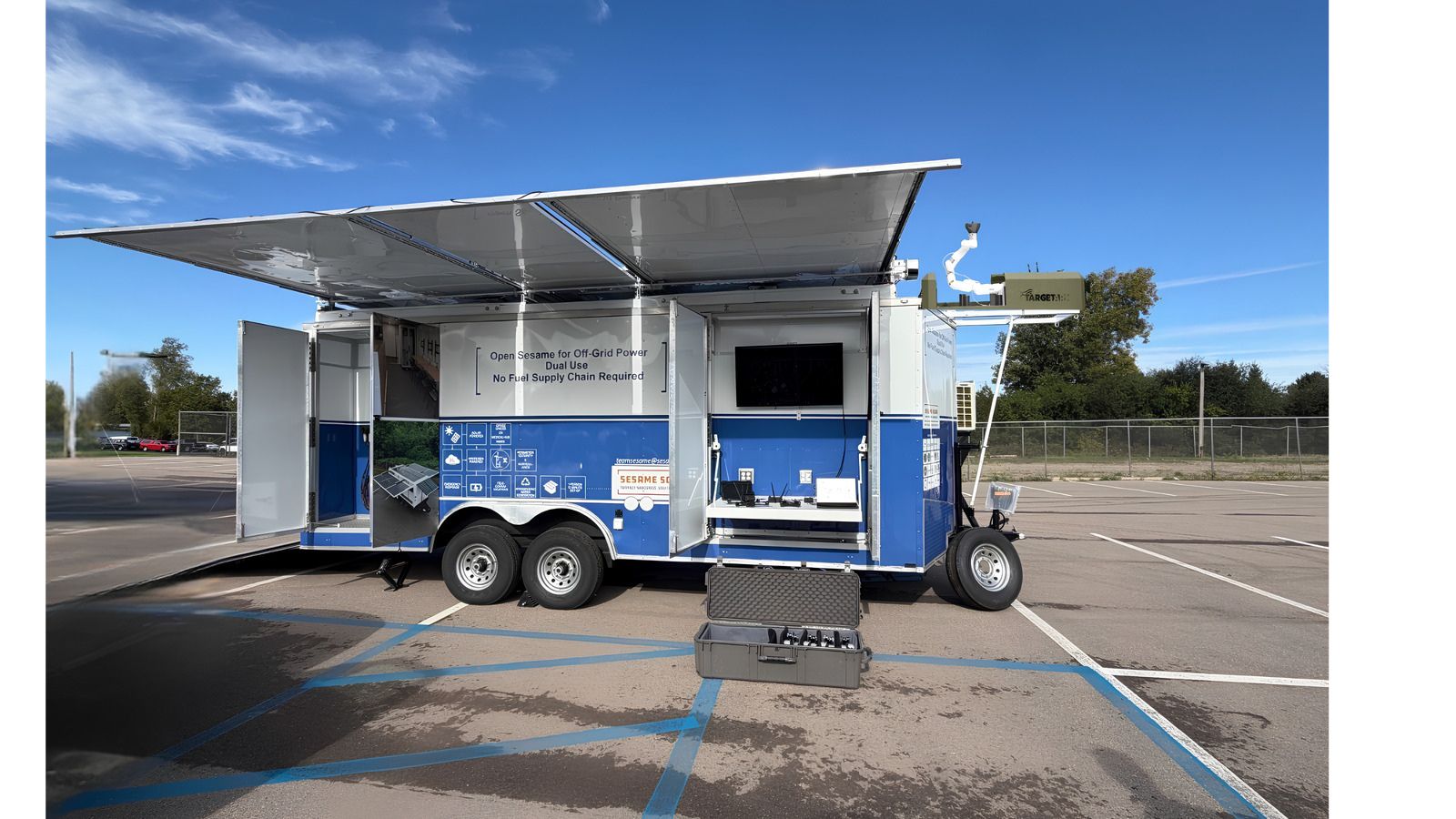
Open Sesame for Persistent Drone Operations
Sesame Solar’s Mobile Power Hub self-generates the energy needed to charge drones and other equipment using solar and hydrogen power with battery storage. This creates a mobile drone charging station that can operate where permanent electrical infrastructure may not be available.
Target Arm’s Ralar system handles autonomous launch and recovery, while its drone magazines help cycle aircraft through deployment, recovery, charging and redeployment. .
AG3 Labs’ SPADE platform provides configurable Group 1 sUAS for a wide range of use cases, including training, first responder operations, law enforcement, military and special operations missions.
Together, the system supports autonomous drone operations with less dependence on fixed infrastructure, recurring fuel deliveries and personnel at the launch and recovery point.
Keep drones powered and ready for continued operations.
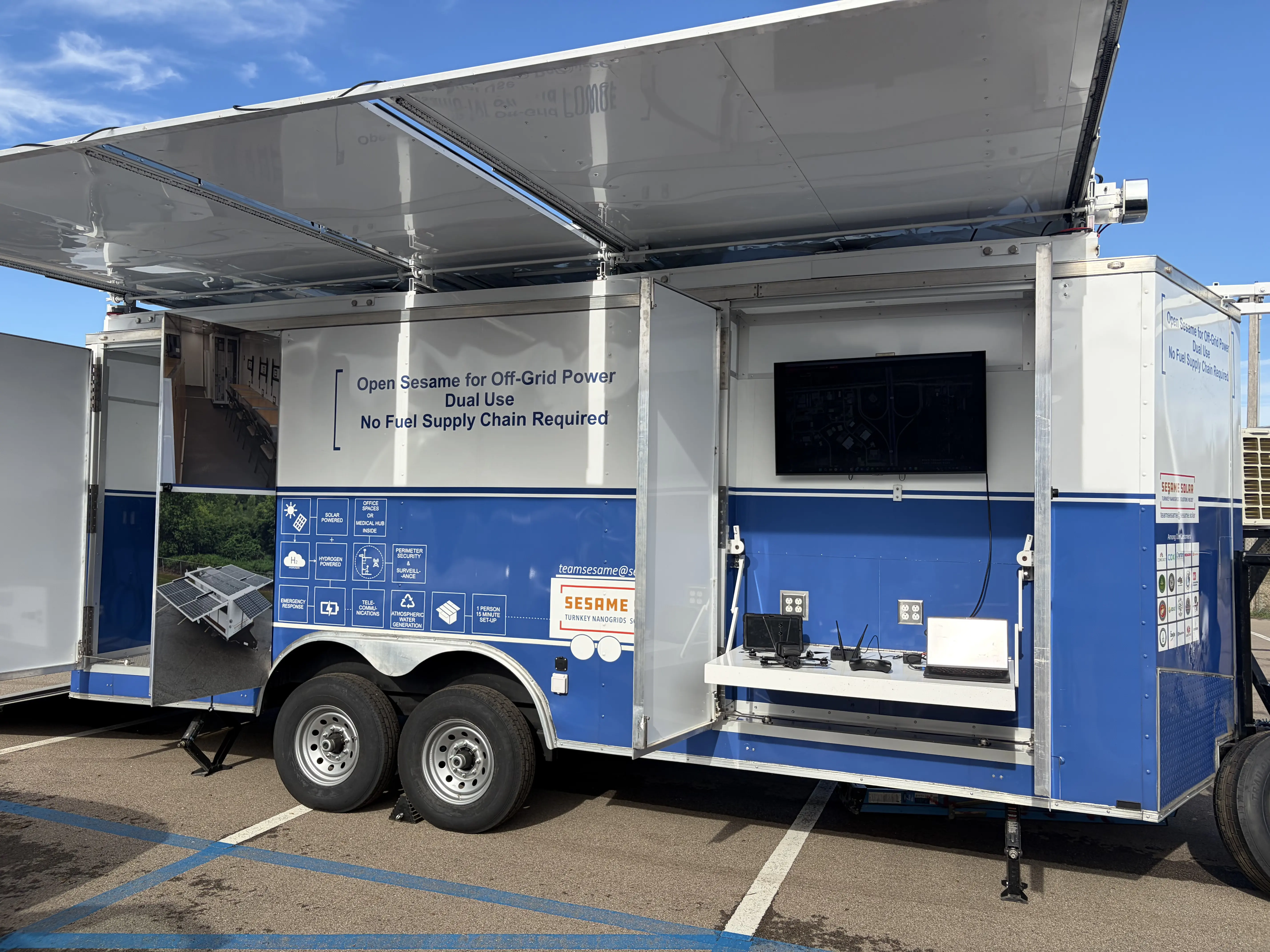
Keep Drones Powered
- Generate and store power where drones are operating.
- Provide off-grid drone charging for aircraft and batteries.
- Charge drones, batteries and other field equipment.
- Use solar and hydrogen power with integrated battery storage.
- Reduce reliance on recurring fuel deliveries.
- Support remote and off-grid operations where permanent infrastructure is unavailable.
Keeping drones in the air depends on having reliable power between flights. By bringing generation and storage directly to the operating location, the Nanogrid functions as a mobile drone recharge station, allowing teams to recharge aircraft and field equipment without depending entirely on grid access or a conventional fuel supply chain.
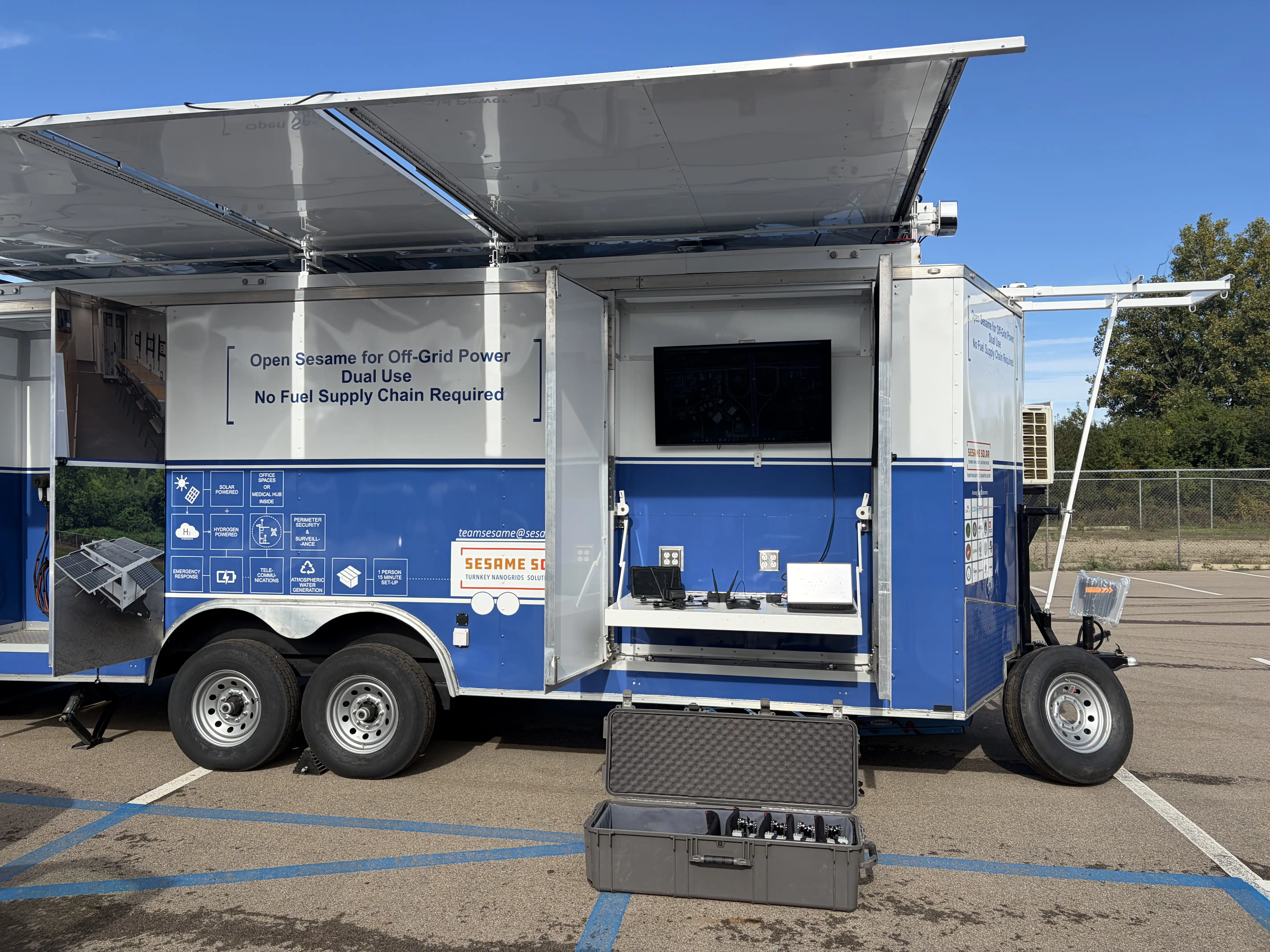
Automate Launch and Recovery
- Launch and recover drones with Target Arm’s Ralar system.
- Cycle aircraft through deployment, recovery and recharging.
- Reduce the need for personnel at the launch and recovery point.
- Support launch and recovery from stationary or moving platforms.
- Prepare aircraft for repeated missions with less manual handling.
Target Arm’s system handles one of the most hands-on parts of drone operations: getting aircraft into the air, bringing them back and preparing them to go again. Its drone magazines help move aircraft through deployment, recovery, charging and relaunch so teams can spend less time managing each individual flight.
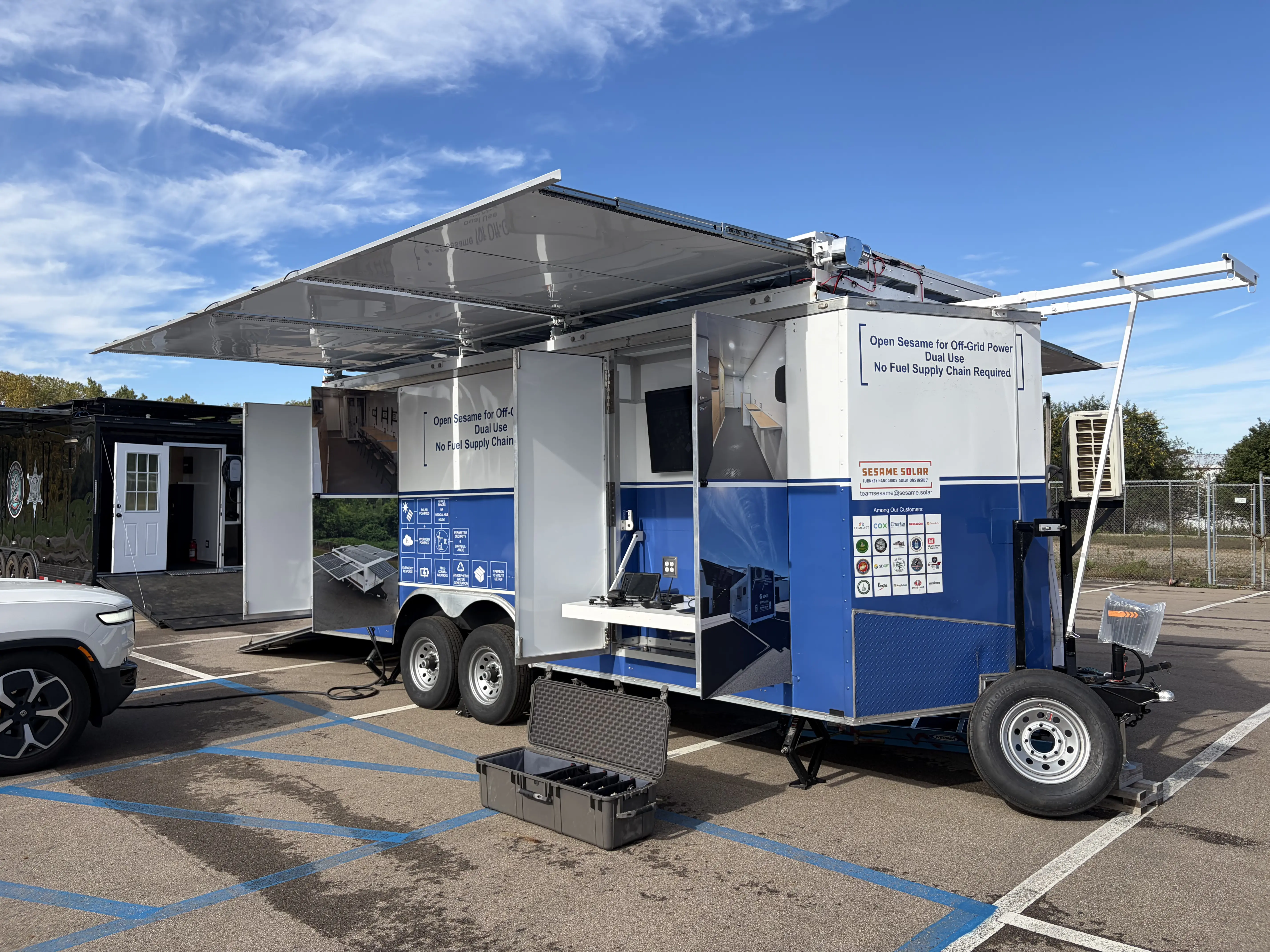
Support Longer Autonomous Drone Operations
- Keep drones available for repeated missions over longer periods.
- Support intelligence, surveillance and reconnaissance (ISR) , communications relay, monitoring and other field uses.
- Operate in remote, austere and forward environments.
- Remotely monitor Nanogrid energy performance.
- Scale from one Nanogrid to multiple interconnected units.
- Support the power and charging needs of a broader drone fleet.
Long-duration drone operations depend on more than flight time. Charging, recovery, power availability and personnel requirements all affect how long a system can remain useful in the field.
The Persistent Drone Operations Nanogrid brings these functions together so aircraft can be powered, launched, charged, recovered, recharged and redeployed from the same mobile platform.
Built for Remote and Repeated UAS Operations
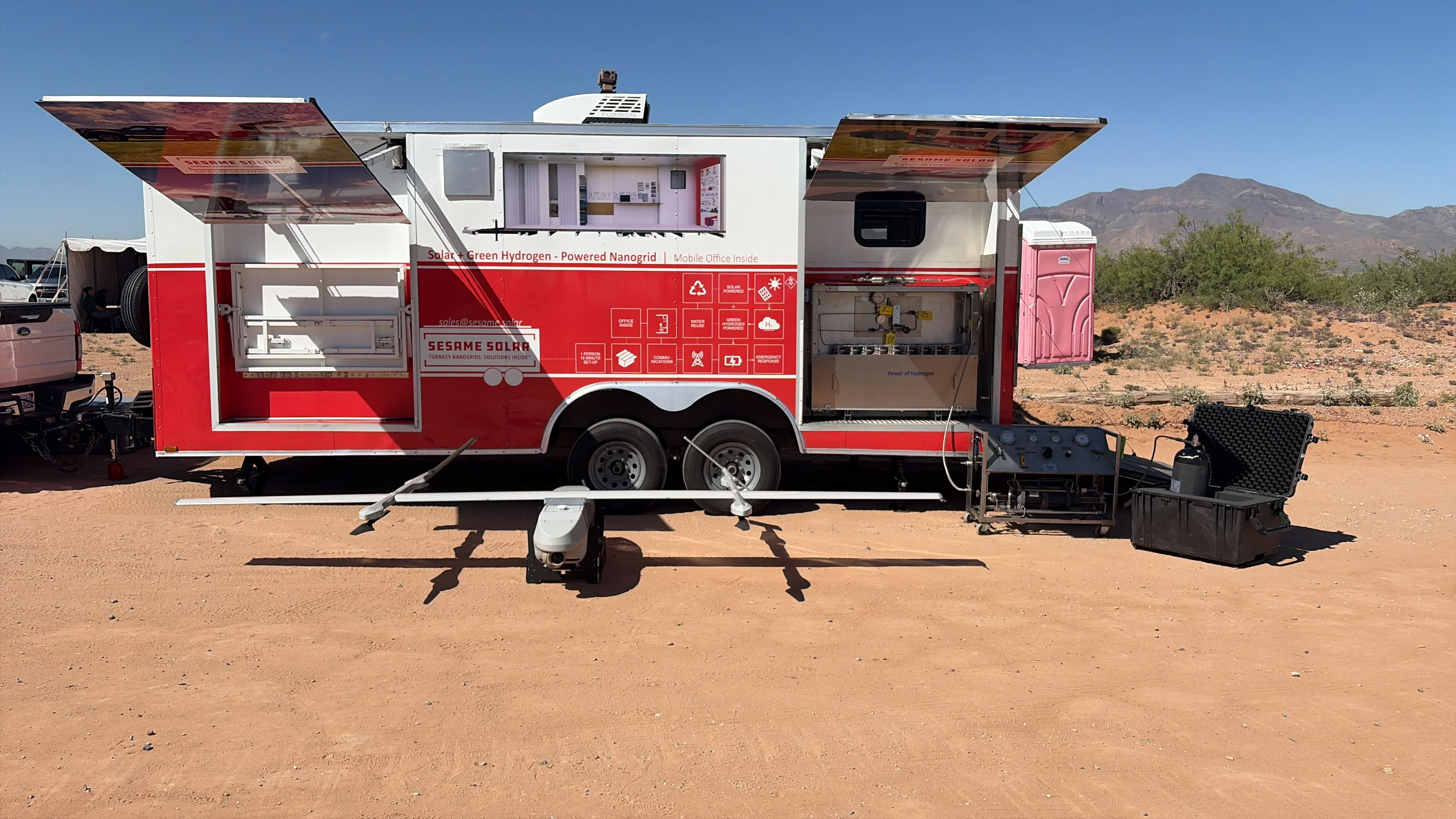
The system can support defense and military operations, law enforcement, emergency response, critical infrastructure monitoring, search and rescue, communications relay and other remote UAS applications.
For defense and expeditionary users, the Nanogrid can also help address the military drone charging challenge by generating and storing power where aircraft are operating rather than relying entirely on fixed electrical infrastructure or recurring fuel delivery.
Potential applications include:
- Persistent ISR
- Perimeter and facility monitoring
- Communications relay
- Search and rescue
- Emergency response
- Critical infrastructure inspection
- Military and expeditionary UAS operations
- Remote security operations
- Training and counter-UAS exercises
The system can operate as a single Nanogrid or scale to two to twelve interconnected Nanogrids, creating a mobile microgrid that can also provide power for man-portable batteries and other field equipment.
Ready to discuss your drone operations requirements?
[Talk to Sesame Solar]
Beyond the Traditional Drone-in-a-Box
Traditional drone-in-a-box and drone docking systems can automate launch, recovery and charging, but they still need a dependable source of power.
The Persistent Drone Operations Nanogrid adds mobile power generation and storage to that operating model, making it possible to deploy drone infrastructure in locations where grid access or fuel logistics are limited.
Instead of relying on a fixed drone docking station connected to permanent infrastructure, the system brings power, charging, launch and recovery capabilities directly to the operating location. This makes it well suited for remote, expeditionary and other environments where conventional infrastructure may not be available.
Featured in


Learn More About Us
Read about our accomplishments last year, including what the media is saying about us and the awards and citations that we have received:
- Fast Company’s 50 Most Innovative Companies and #1 in Disaster Response
- Cleanie Award finalist: Keep the Power On award category
- SDX Top 5 Enterprise Sustainability
- SEAL Sustainable Innovation
- Insider Climate Action 30
- National Infrastructure Innovation Challenge Top 5
- Jupiter Research Carbon Reduction Innovation of the Year
Contact our team today at TeamSesame@sesame.solar, to learn more about the world’s first 100% Renewable, Mobile Nanogrid..


Key Facts
Learn more about the power and versatility of Sesame Solar's Nanogrid.

It is an integrated mobile system that combines Sesame Solar’s off-grid power technology, Target Arm’s autonomous launch and recovery system, and AG3 Labs’ unmanned aircraft.
Yes. Target Arm’s Ralar system supports autonomous launch and recovery. Its drone magazines also help move aircraft through recovery, charging and relaunch.
No. Sesame Solar’s Mobile Power Hub can generate and store energy on-site using solar and hydrogen power with battery storage.
Yes. The Nanogrid can also provide power for man-portable batteries and other forward equipment.
Potential uses include ISR, communications relay, perimeter monitoring, search and rescue, emergency response, infrastructure inspection, training and other remote drone operations.
