What Are Persistent Drone Operations? How to Keep UAS Missions Running Around the Clock

Keeping drones operating around the clock takes more than longer battery life. Learn how reliable power, automated charging, recovery systems, and coordinated redeployment help support persistent UAS missions, specifically in remote and off-grid environments.
Key takeaways
- Persistent drone operations depend on reliable aircraft deployment, charging, recovery, communications, and redeployment—not simply longer flight times.
- Automated docking and recovery systems help reduce downtime but still require dependable power.
- Mobile Nanogrids can support off-grid UAS operations in remote, emergency, and expeditionary environments.
- Sesame Solar, Target Arm, and AG3 Labs combine mobile power, automated launch and recovery, and unmanned aircraft in an integrated system.
Drones have become valuable tools for security, surveillance, emergency response, and infrastructure monitoring. But keeping an unmanned aircraft system (UAS) operating for extended periods requires more than a drone with a long flight time. It takes a coordinated system for power, charging, recovery, communications, and redeployment.
This is the idea behind persistent drone operations: maintaining an ongoing aerial capability through repeated flights, reliable ground support, and minimal interruptions between missions.
For organizations operating in remote locations or zones with limited infrastructure, the challenge is not only keeping a drone in the air. It is keeping the entire operation ready to respond.
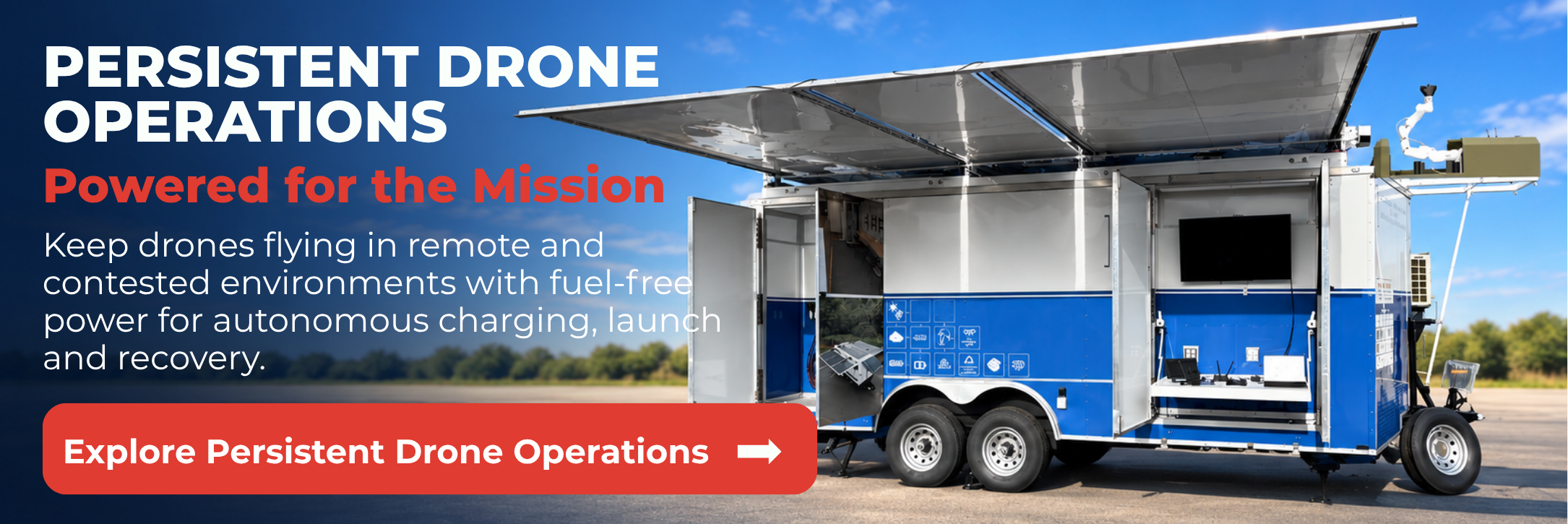
What Are Persistent Drone Operations?
Persistent drone operations refer to the ability to sustain UAS missions for extended durations through coordinated aircraft deployment, recovery, servicing, and relaunch.
Unlike a single drone flight, a persistent operation is designed to maintain surveillance, monitoring, or mission readiness over time. Depending on the application, this may involve scheduled flights, rotating aircraft, automated docking stations, or continuous standby capability.
Persistence does not necessarily mean a single drone stays airborne 24 hours a day. Rather, it means the overall system can support repeated missions with limited downtime.
For example, a security team monitoring a remote facility may use drones for regular patrols day and night. When one drone returns to recharge, another may be deployed, or the same aircraft may relaunch once it is ready.
The goal is to keep operational coverage without repeatedly rebuilding the support infrastructure for each flight.
What Does It Take to Keep Drone Operations Running?
A persistent UAS operation depends on several integrated systems. A failure in any one of them can interrupt the mission, even when the aircraft itself is functioning properly.
For operations at established facilities, some of these requirements can be supported by existing electrical and communications infrastructure. Remote and temporary deployments present a different challenge.
A drone docking station may automate takeoff, landing, and charging, but it still needs dependable electricity. Communications equipment, sensors, and supporting systems also require power, whether the aircraft is flying or on standby.
Without reliable ground infrastructure, the advantages of automation and extended mission availability become harder to achieve.
Why Power Is Critical to Persistent UAS Missions
Power is often discussed in terms of drone battery life. However, persistent operations require a wider view of energy needs.
The aircraft is only one part of the system. Docking stations, charging equipment, communications networks, and mission-support electronics may all operate for extended periods.
This is especially important for:
- Defense and expeditionary operations, where UAS teams may deploy beyond established power network.
- Border and perimeter security, where monitoring equipment must remain available across remote areas.
- Emergency response, where damaged infrastructure can limit access to conventional power.
- Critical infrastructure inspections, where repeated flights may be needed across large or isolated sites.
The Federal Aviation Administration (FAA) recognizes the growing role of drones in emergency situations, including search and rescue, firefighting, and infrastructure restoration. For these undertakings, access to dependable power can be especially important when conventional infrastructure has been disrupted.
Diesel generators have traditionally supported temporary off-grid operations, but they require fuel deliveries, maintenance, and periodic servicing. Depending on mission requirements, those logistics requirements can complicate or prevent long-duration deployments.
Mobile Nanogrids provide another option by combining local power generation, battery storage, and energy management in a transportable system. The U.S. Department of Energy identifies microgrids as an important technology for improving energy reliability and resilience, especially in remote locations and during grid disruptions.
For drone operators, the benefit is not simply an alternative source of electricity. It is the ability to establish power infrastructure where the mission needs it, including locations without dependable grid access.
Supporting Persistent Drone Operations With Mobile Nanogrids
As UAS deployments become more automated, their supporting power systems must be able to operate with similar reliability.
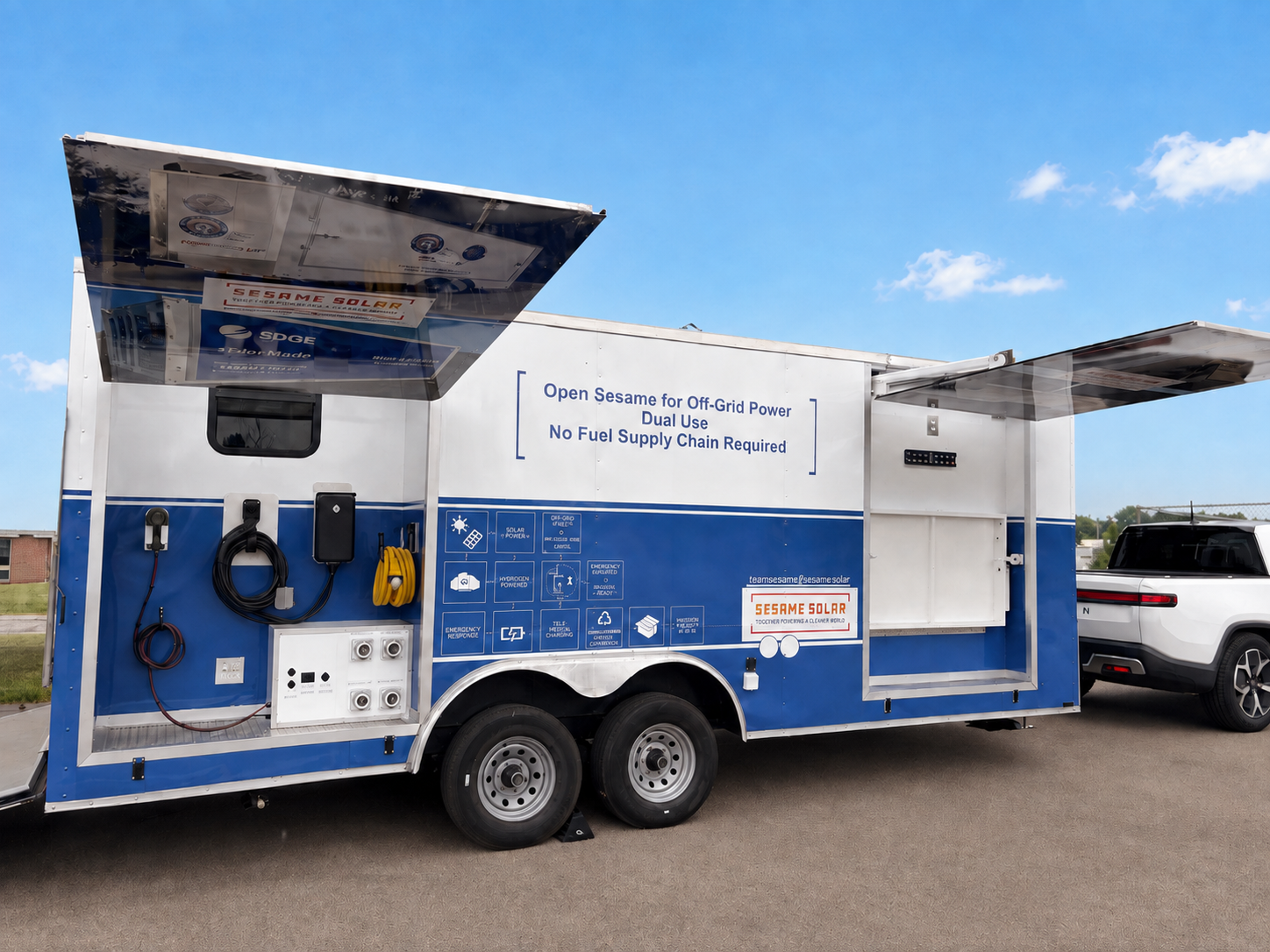
Sesame Solar's Mobile Nanogrids are designed to provide deployable off-grid power for remote and temporary operations. By combining solar generation, hydrogen, battery storage, and energy management, they can supply electricity for equipment that must operate beyond the duration of an individual drone flight.
Building on this technology, Sesame Solar has partnered with Target Arm and AG3 Labs to develop an integrated Persistent Drone Operations Nanogrid.
The system brings together three components:
- Sesame Solar's Mobile Nanogrid, providing self-generating off-grid power for charging and supporting equipment.
- Target Arm's Ralar system for autonomous launch and recovery, enabling drones to be deployed and recovered with less manual handling.
- AG3 Labs' unmanned, attritable aircraft, providing the aircraft platform for repeated missions.
Together, these technologies reduce the logistics issues of sustaining drone operations in remote and expeditionary environments.
The system integration also addresses a limitation of many conventional drone-in-a-box systems: their dependence on an external source of electricity. By including mobile power generation and storage, the Persistent Drone Operations Nanogrid is designed to operate where permanent electric infrastructure may be unavailable.
Read more about the partnership in Sesame Solar's announcement of the Persistent Drone Operations Nanogrid.
Planning for Extended-Duration UAS Operations
Organizations evaluating persistent drone operations should proceed by considering the requirements of the entire mission, not just the aircraft's advertised flight endurance.
That means assessing how frequently flights must occur, how quickly aircraft must be recharged and redeployed, and whether unbroken coverage requires multiple drones. Operators should also account for communications availability, weather conditions, maintenance, and the power consumed by equipment on the ground.
Ultimately, persistent drone operations depend on the reliability of the complete system. Aircraft capability matters, but dependable charging, recovery, communications, and ground power are what make sustained missions possible.
For organizations deploying UAS in distant or infrastructure-limited environments, planning for those supporting systems from the beginning can make the difference between an occasional drone flight and a dependable long-duration operation.
Learn more: Explore Sesame Solar's Power for Persistent Drone Operations to see how mobile power, autonomous launch and recovery, and unmanned aircraft work together to support repeated missions.
Frequently asked questions
What is the difference between persistent drone operations and long-endurance drone flights?
Long-endurance flights focus on how long an individual aircraft can remain airborne. Persistent drone operations focus on maintaining mission capability over time through repeated flights, charging, recovery, and redeployment.
Can drones operate continuously without landing?
Most battery-powered drones must periodically land for charging or battery replacement. Persistent operations can use multiple aircraft, automated recovery, and scheduled redeployment to reduce gaps in coverage.
How do drone-in-a-box systems support persistent operations?
Drone-in-a-box systems automate functions such as launch, landing, charging, and storage. However, they still require dependable electricity and communications to support repeated missions.
Can persistent drone operations work without grid power?
Yes. Off-grid power systems, including Mobile Nanogrids, can provide electricity for drone charging, docking stations, and associated equipment where permanent electrical infrastructure is unavailable.
What industries use persistent drone operations?
Potential applications include defense, border security, emergency response, search and rescue, critical infrastructure inspections, and remote facility monitoring.
