Nanogrid vs Microgrid: What’s the Difference and Why It Matters
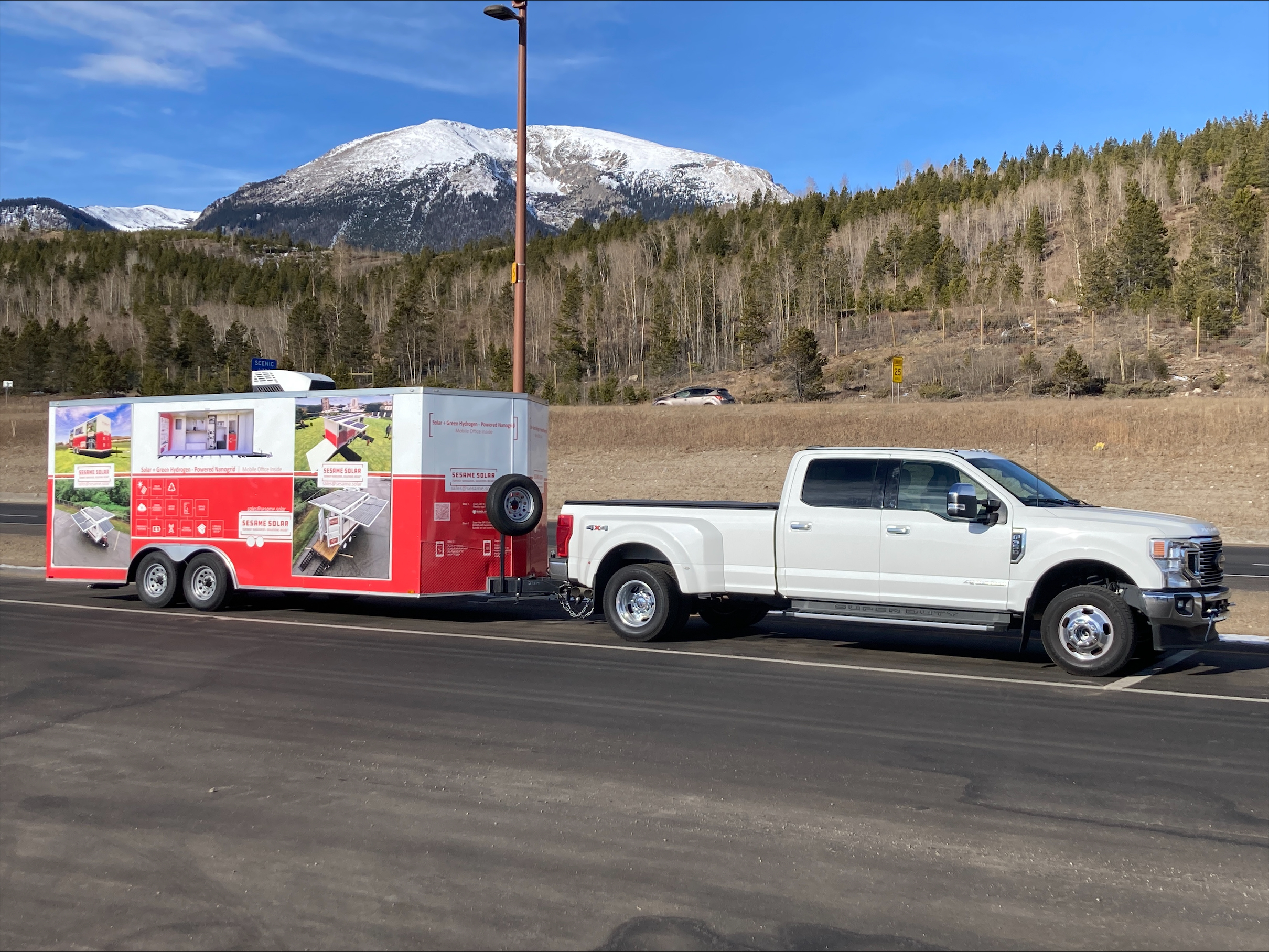
In today’s age of accelerating extreme weather disasters, power grid vulnerabilities, and increased demand for energy resilience, the terms “microgrid” and “nanogrid” are gaining mainstream attention. But what exactly is a nanogrid? How does it compare to a microgrid? And why are organizations, from emergency response teams to military bases and telecom providers, increasingly looking at nanogrids as a solution?
This article breaks down the core differences between nanogrids and microgrids—technically, economically, and practically—so decision-makers can better understand how these systems fit into their energy strategy.

What Is a Nanogrid?
A nanogrid is a small, self-contained energy system designed to power a single building, facility, or load. It includes its own generation (usually solar), storage (typically batteries), and control systems, and it can operate autonomously, off-grid, or in tandem with the main grid. Crucially, a nanogrid is limited in size—often defined as producing and managing under 100 kW of power.
Unlike larger-scale microgrids, nanogrids are optimized for portability, plug-and-play functionality, and deployment speed. Think of them as the "tiny house" of the energy world: compact, independent, and surprisingly powerful.
Key Features of a Nanogrid
- Output: Typically under 100 kW
- Scope: Powers a single building or localized use case
- Operation: Grid-connected or islanded. Nanogrids can also work together to form a microgrid for increased power output.
- Components: Solar panels, battery storage, inverter, controller, optional backup
- Portability: Often trailer-mounted or easily deployable
Nanogrids are particularly useful in emergency response, disaster recovery, rural clinics, construction sites, military forward operating bases, and temporary telecom towers—anywhere reliable energy is needed, fast.
What Is a Microgrid?
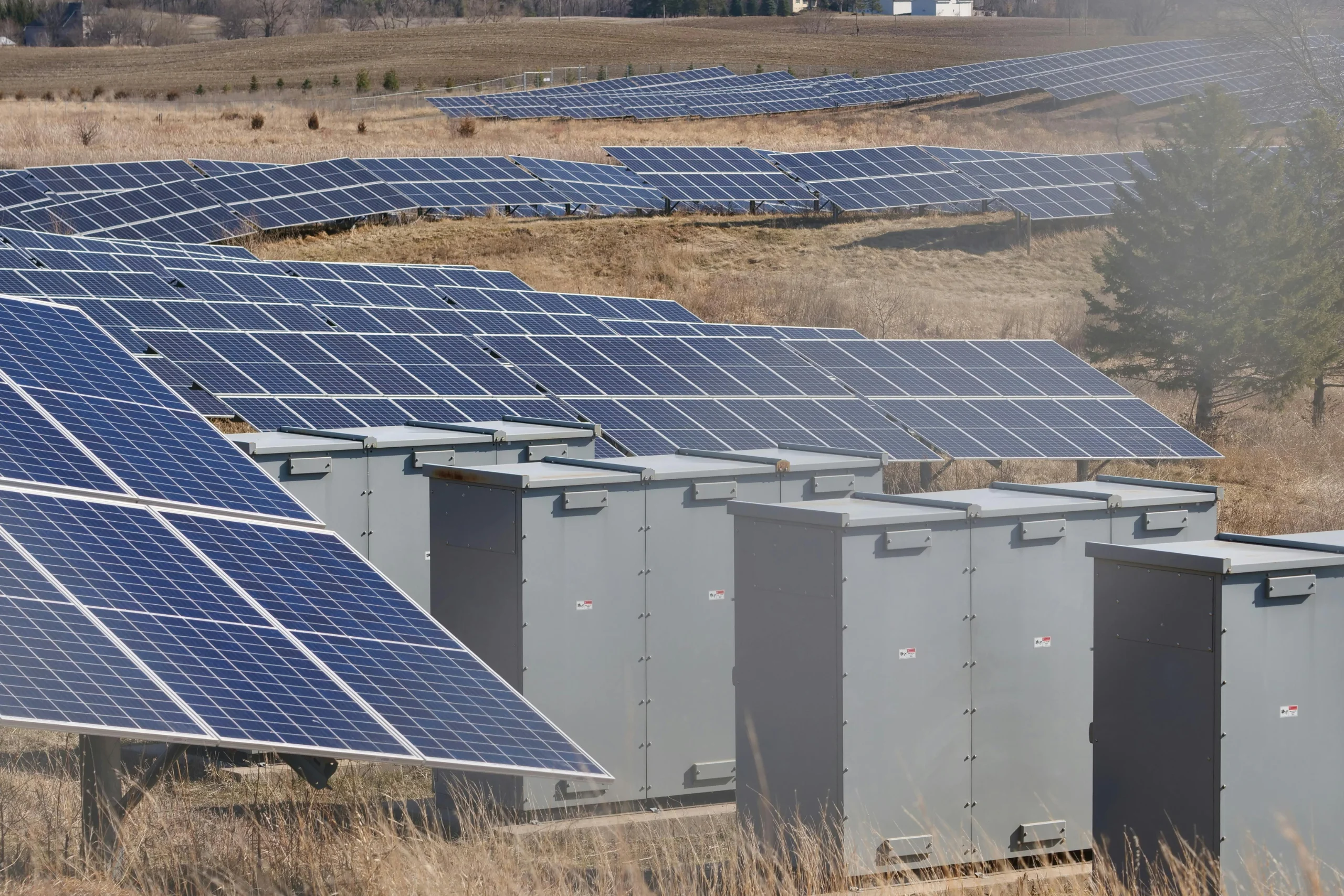
A microgrid, by contrast, is a larger localized energy system capable of supporting a campus, neighborhood, or complex of buildings. It combines multiple sources of energy—solar, wind, diesel generators, natural gas turbines—with control and storage components to manage loads and balance demand. Microgrids can operate independently (island mode) or remain connected to the main utility grid.
Key Features of a Microgrid
- Output: From 100 kW up to several megawatts
- Scope: Serves multiple buildings or an entire campus
- Complexity: Includes advanced control systems, demand response, utility interconnects
- Integration: Designed to work with utility-scale systems
- Use Cases: Universities, military bases, remote communities, commercial campuses
Microgrids are more complex and take longer to design, engineer, and build. They offer long-term resilience and load-balancing benefits, but they lack the speed and simplicity of nanogrids.
Nanogrid vs Microgrid: Head-to-Head Comparison
Nanogrids and microgrids often get lumped together because they both involve local energy generation and control. But they’re built for different realities.
A nanogrid is typically a smaller system designed to serve a single building or tightly defined load, and it can often be deployed quickly, sometimes even in a portable format. A microgrid, on the other hand, is usually larger, engineered to support multiple buildings or an entire campus, and it often requires more complex planning, utility coordination, and longer timelines.
The comparison below breaks down the key differences side-by-side so it’s easy to see which approach fits a given site, timeline, and mission.
Why Nanogrids Are Gaining Traction
Microgrids have been around for decades, but nanogrids are the newer frontier. Several converging trends have fueled the rise of nanogrids in the last five years:
1. Extreme Weather Disasters and Power Outages
From record-breaking wildfires to deadly hurricanes and ice storms, extreme weather is pushing centralized grid infrastructure past its breaking point. Nanogrids offer rapid, resilient power where the grid fails.
2. Faster Deployment Needs
When every minute matters—after a natural disaster, during a telecom outage, or in conflict zones—waiting months to install a microgrid is not an option. Nanogrids, like those developed by Sesame Solar, can be operational in under 15 minutes.
3. Portability
Mobile nanogrids can be towed, airlifted, or even shipped internationally to deliver power where it’s needed most. Their portability opens up new possibilities for energy equity, remote infrastructure, and disaster logistics.
4. Energy Independence
Nanogrids are self-contained. That means no fuel deliveries, no utility interconnects, and no ongoing fuel costs. In an era of disrupted supply chains and geopolitical instability, being fuel free and energy independent is a strategic asset.

Real-World Example: Nanogrids in Action
After Hurricane Maria devastated Dominica in 2017, the Grand Fond Health Clinic lost power for weeks. Sesame Solar deployed a Mobile Nanogrid that restored reliable electricity—powering refrigeration, communications, and medical equipment—without diesel or permanent infrastructure. The clinic was up and running quickly, with no need for grid access or fuel deliveries, and is still operational today
This is where nanogrids shine: agility + autonomy.
When to Choose a Nanogrid Over a Microgrid
Choosing between a nanogrid and a microgrid ultimately comes down to scope, speed, mobility, and mission priorities. Microgrids are powerful and expansive but often require significant time, engineering, permitting, and capital investment. Nanogrids, on the other hand, offer a compact, agile, and scalable solution for specific use cases where traditional infrastructure or grid access isn’t feasible—or fast enough.
To determine if a nanogrid is the right fit for your situation, ask yourself the following:
Do you need power fast—within hours or days—not months?
In emergencies, construction timelines, or remote operations, waiting months for a microgrid build-out isn’t practical. Nanogrids are preconfigured, modular, and in many cases, preassembled at the factory. Solutions like Sesame Solar’s Mobile Nanogrids can be deployed and activated on-site in under 15 minutes, offering immediate access to critical power for communications, refrigeration, medical devices, water purification, and lighting.
Is portability a requirement?
If your operation moves or spans multiple locations—such as FEMA disaster zones, mobile vaccination clinics, telecom towers in remote terrain, or defense field deployments—you need a power solution that can move with you. Nanogrids are often trailer-mounted or containerized, designed to be towed by a standard vehicle, shipped by sea, or even airlifted into inaccessible regions. Their compact footprint and fast setup make them ideal for mobile use cases.
Are you powering a single load, building, or piece of infrastructure?
Nanogrids are optimized for focused power delivery. This makes them perfect for temporary hospitals, command centers, off-grid homes, research stations, or construction trailers. If your energy demand is isolated and under 100 kW, a nanogrid provides clean and continuous power without the overhead of managing a complex, multi-building system.
Do you want to eliminate fuel use and reduce fuel supply risks?
Diesel generators have long been the go-to for backup power—but they come with major downsides: toxic emissions, high fuel costs, noise, and reliance on fragile supply chains. Nanogrids powered by solar energy and lithium battery storage are fuel–free, increasing your energy independence while also insulating you from fuel shortages and logistical headaches. In emergency or military settings, avoiding diesel resupply can literally save lives.
Is your energy load under 100 kW?
If your application doesn't require more than 100 kilowatts of power—common for small healthcare facilities, single telecom towers, temporary offices, or residential loads—a nanogrid is both sufficient and more cost-effective than a full-scale microgrid. Its smaller footprint also reduces permitting complexity, makes transport easier, and allows for faster activation.
Nanogrids aren’t a “lesser” version of microgrids; they’re purpose-built solutions for very specific needs. If your goal is rapid, localized, clean power—especially in areas without grid access or with unstable infrastructure—a nanogrid isn’t just the more efficient option; it’s often the only viable one.
Organizations across public health, telecommunications, national security, and local government are turning to nanogrids not just because they’re clean, but because they’re adaptable, fast, and built for today’s evolving challenges.
If flexibility, speed, and energy independence are your top priorities, then choosing a nanogrid is not just smart—it’s strategic.
Can Nanogrids Work Alongside Microgrids?
Absolutely. Think of nanogrids as scalable energy building blocks. In larger ecosystems, they can:
- Serve as temporary energy during microgrid installation
- Provide backup during microgrid failure
- Power edge nodes like security posts or telecom towers
- Support military microgrid outposts in the field
Sesame Solar, for instance, works with telecom and defense partners to deploy nanogrids as tactical extensions of larger systems.
Looking Ahead: The Role of Nanogrids in a Resilient Future
As governments, corporations, and communities build resilience into their operations, nanogrids are no longer fringe solutions:they are essential tools.
They address critical needs at the intersection of:
- Clean energy
- Disaster response
- Decentralized infrastructure
- National security
- Healthcare delivery
- Digital connectivity
The world needs power that’s clean, fast, and mobile, and nanogrids deliver exactly that.
Key Takeaways
- A nanogrid is a compact, self-contained energy system that powers a single load or building, typically under 100 kW, and can operate off-grid.
- A microgrid is larger, serves multiple buildings, and requires more time and complexity to implement.
- Nanogrids are ideal for emergency response, healthcare, telecom, and defense, especially when speed, mobility, and energy independence are priorities.
- Nanogrids and microgrids are complementary, not competitive—each serves a distinct purpose in modern energy infrastructure.
- As climate change accelerates, mobile clean energy systems like nanogrids are becoming essential for resilience and recovery.
Frequently Asked Questions (FAQ)
1. What is the main difference between a nanogrid and a microgrid?
The key difference lies in scale and scope. A nanogrid typically serves a single building or use case and outputs under 100 kW, while a microgrid can serve multiple buildings or a campus and ranges from 100 kW to several megawatts. Nanogrids are also more portable and faster to deploy, making them ideal for temporary or mobile energy needs, especially in emergencies or off-grid scenarios.
2. Are nanogrids a replacement for microgrids?
Not at all. Nanogrids and microgrids serve different needs and are often complementary. Nanogrids excel in mobile, temporary, and localized scenarios where rapid deployment and energy independence are essential. Microgrids, meanwhile, provide longer-term infrastructure for communities or campuses that need larger, more integrated energy solutions.
3. How long does it take to deploy a nanogrid?
Nanogrids, especially turnkey solutions like Sesame Solar’s Mobile Nanogrids, can be deployed and activated in less than 30 minutes. That includes setup, solar array unfolding, and system activation. This is a major advantage during disaster recovery or mission-critical operations.
4. Are nanogrids only powered by solar?
Not necessarily, though many leading nanogrids—including Sesame Solar’s—are designed to be 100% fossil fuel–free and solar-powered. Some systems may include hybrid components like wind or hydrogen fuel cells. However, the core appeal is typically solar + battery storage for clean, reliable power without fuel logistics.
5. Can a nanogrid connect to the utility grid?
Yes, nanogrids can be grid-tied if needed, but they are designed to operate independently. This “islanding” capability allows them to continue delivering power when the main grid is down, making them ideal for emergency or off-grid use. Grid connection is optional, not required.
