Hydrogen-Powered UAVs: Why Longer Endurance and Fewer Fuel Convoys Matter
Excerpt
Hydrogen-powered UAVs are gaining attention because they promise something operators need more of: endurance. With longer flight times, faster refueling than battery recharging, and less dependence on vulnerable fuel logistics, they could reshape how remote and contested missions are sustained. Recent military and energy-sector developments are pushing this technology from concept toward operational reality.
Key takeaways
- Hydrogen fuel cells can dramatically extend UAV endurance compared totypical battery-powered drones; the U.S. Department of Energy says many battery UAVs last up to about 30 minutes, while hydrogen fuel cells can push air time to roughly eight hours and refuel in less than 15 minutes.
- Longer endurance drones reduce the number of launches, recoveries, battery swaps, and recharge cycles required to sustain a mission. That makes hydrogen especially relevant for ISR, border monitoring, and other persistent operations.
- Army lessons on tactical energy warn that batteries deplete rapidly, generators are vulnerable to detection, and fuel convoys are high-value targets. That makes reduced resupply dependence a real operational advantage.
- Hydrogen-powered UAVs can also support lower thermal and acoustic signatures than combustion-based alternatives, which matters in defense and security missions.
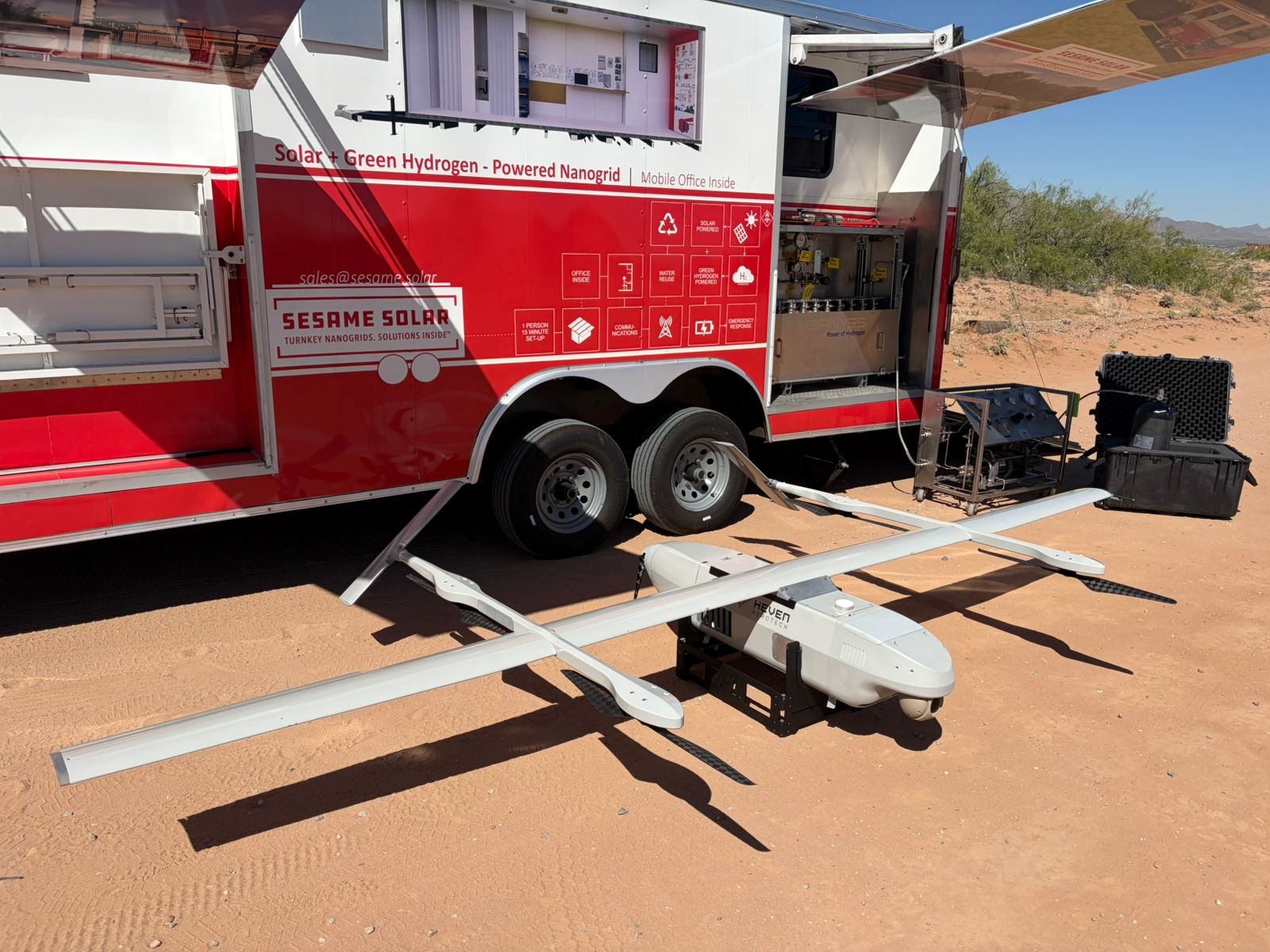
- Sesame Solar’s Drone Refueling Nanogrid positions hydrogen UAVs within a larger off-grid sustainment model by combining solar, hydrogen generation, solid-state hydrogen storage, and battery storage for prolonged field operations.
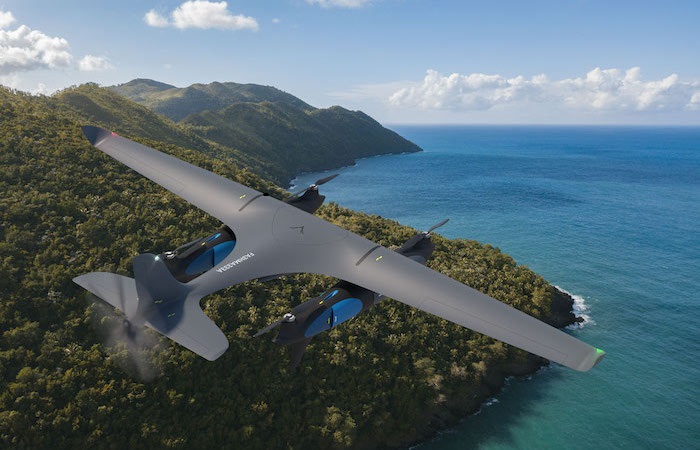
For years, the conversation around unmanned aerial vehicles has focused on sensors, payloads, autonomy, and software. Those all matter. But in many real-world missions, the real constraint is much simpler: endurance. A drone that can only stay aloft for a short window, or that depends on a constant cycle of battery charging and resupply, can limit the value of the entire mission. That is one reason hydrogen-powered UAVs are drawing more attention from defense planners and remote operators alike. Hydrogen fuel cells promise a different operating model, one built around longer flight times, fewer interruptions, and less dependence on fragile logistics.
The endurance problem is bigger than the drone itself
Traditional battery-powered drones have obvious advantages. They are familiar, increasingly capable, and well-suited for many short-duration missions. But batteries create a hard ceiling. The U.S. Department of Energy notes that many UAVs typically run on batteries that last up to 30 minutes before a recharge is needed. In contrast, DOE says hydrogen fuel cells can increase UAV air time to roughly eight hours and be refueled in less than 15 minutes. That difference is not minor. It can help operators keep drones in the air longer, reduce coverage gaps, and support more persistent missions.
That endurance advantage is a major reason hydrogen is gaining attention in defense. Defense One reported that hydrogen-fuel-cell drones can offer a much smaller thermal signature than internal combustion platforms while also reaching far longer durations than short-endurance systems common in current conflicts. In one cited example, a hydrogen drone achieved about 10 hours of flight time and roughly 100 miles of range using a small quantity of hydrogen. For military users thinking about the Pacific, wide-area border operations, or long-duration ISR, that kind of endurance opens a different category of mission planning.
Why longer endurance matters operationally
Longer flight time is not just a technical improvement. It directly affects how a mission is staffed, supplied, and sustained. Every landing to swap batteries, every return to a charging point, and every extra generator or fuel run adds complexity. The Army’s Center for Army Lessons Learned recently underscored how battlefield electricity has become a critical operational issue: batteries deplete rapidly, generators are vulnerable to detection, and fuel convoys are high-value targets for artillery and drones. In that environment, the goal is not simply to keep a platform in the air. It is to reduce the number of energy-related weak points surrounding the mission.
That is where hydrogen-powered UAVs start to look strategically advantageous. If an operator can keep a drone aloft for many hours rather than dozens of minutes, the mission may require fewer launches, fewer recovery cycles, and fewer touchpoints for recharging or refueling. And if hydrogen can be generated or supplied closer to the point of use, the operation becomes less dependent on repeated fuel deliveries and less exposed to the risks that come with convoy-based logistics. Defense One highlighted exactly this point in describing deployable hydrogen refueling stations for remote island bases, where reducing reliance on vulnerable resupply lines becomes a tactical advantage, not just a convenience.
Greater mission flexibility starts with energy flexibility
The strongest case for hydrogen-powered UAVs is not that they replace every battery drone. It is that they expand what operators can realistically ask a drone to do. A short-flight system may work well for quick inspections, brief overwatch, or near-base operations. But longer-endurance hydrogen UAVs can support a broader set of use cases: persistent surveillance, maritime monitoring, extended border patrol, relay and communications missions, infrastructure security, and remote-area reconnaissance. When endurance goes up, the number of possible missions expands with it.
There is also a signature advantage. Hydrogen fuel-cell propulsion paired with electric motors can reduce the acoustic and thermal penalties associated with combustion-based alternatives. DOE has noted that fuel-cell systems in military applications can help reduce sound and thermal signatures, and Defense One similarly reported that hydrogen-powered drones have a smaller thermal signature than drones using internal combustion engines. For defense and security operations, this can translate into more discretion and lower detectability in the field.
The real breakthrough is not just the aircraft
Still, the most important point is this: hydrogen-powered UAVs only become truly transformative when the refueling and support infrastructure evolves with them. A long-endurance drone is valuable, but its full potential is realized when operators can support it in remote or austere locations without relying on traditional grid access or constant fuel deliveries.
That broader shift is already visible. In March 2026, ERDC highlighted the Army’s first operational hydrogen-powered remote energy node, a compact, self-contained microgrid with fuel cells, solar panels, hydrogen storage, batteries, an electrolyzer, and atmospheric water generation. According to ERDC, the system was designed to operate independently of the traditional grid, replace conventional diesel generators, and provide silent, resilient power for remote surveillance and meteorological equipment. The significance of that project goes beyond one demonstration. It shows that the military is increasingly thinking about hydrogen not just as a vehicle fuel, but as part of a wider operating architecture for austere missions.
Where Sesame Solar fits
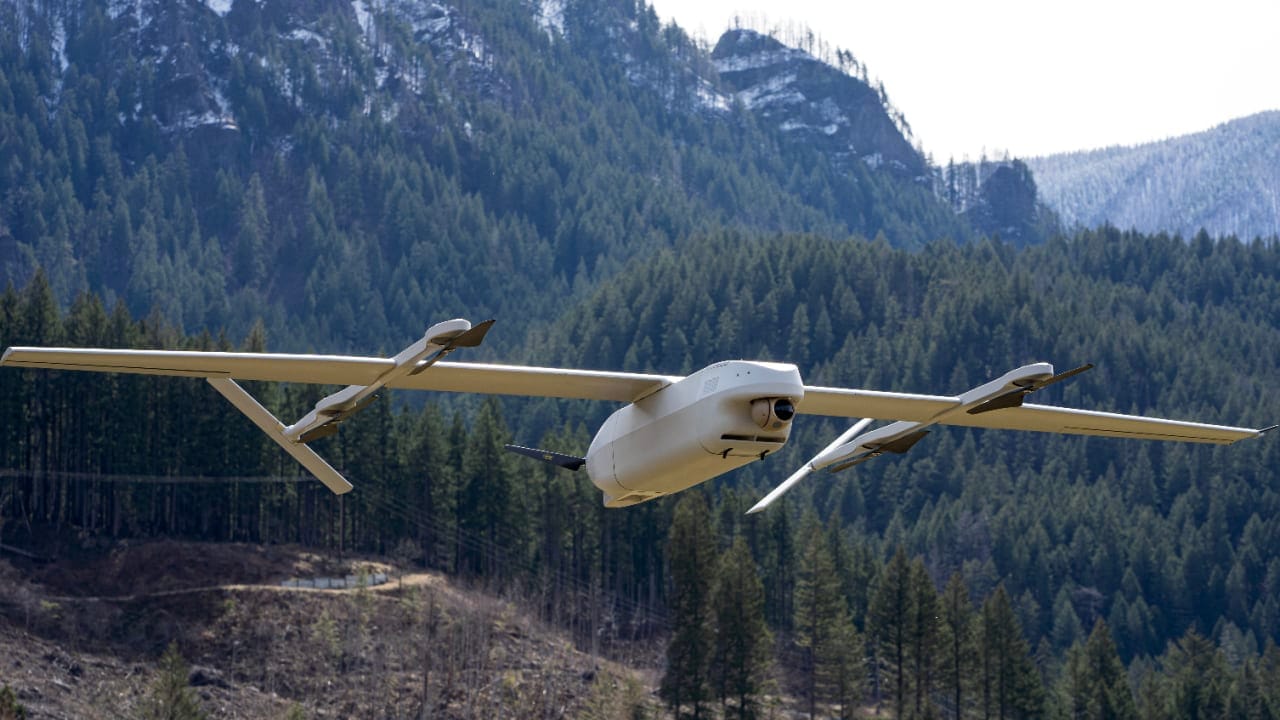
This is also where Sesame Solar’s positioning becomes especially relevant. Sesame’s Mobile Drone Refueling Nanogrid, launched with Heven AeroTech, is built around the idea that long-endurance UAVs need equally resilient field support. Sesame’s mobile system combines solar generation, hydrogen generation, low-pressure solid-state hydrogen storage, battery storage, and rapid deployment mobility to create a closed-loop refueling station for hydrogen-powered drones. When Sesame is combined with Heven’s Z1 drones, the paired system delivers 8+ hours of flight endurance, supports 24/7 surveillance operations, and reduces dependence on external fuel supplies in remote or contested environments.
This matters because it shifts the conversation from “How do we keep recharging drones?” to “How do we sustain aerial operations for weeks or months with fewer logistical vulnerabilities?” For defense, homeland security, and remote surveillance missions, that is the more important question. A longer-endurance hydrogen UAV is useful. A longer-endurance hydrogen UAV paired with mobile, self-generating refueling infrastructure is far more consequential.
Adoption will depend on more than performance
None of this means hydrogen will instantly replace battery-powered UAVs across the board. Different mission classes still call for different aircraft and energy systems. There are also practical questions around fueling standards, maintenance, transport, and integration into existing fleets. In other words, the future of hydrogen UAVs will not be decided by endurance alone. It will also depend on whether the broader support ecosystem matures fast enough to make deployment practical at scale.
But the direction is clear. Military and remote operators are looking for ways to stay in the air longer, reduce the logistics burden around every sortie, and keep missions moving even when the grid is unavailable or resupply is risky. Hydrogen-powered UAVs address all three pressures at once. That is why they are no longer just an interesting emerging technology. They are becoming part of a larger conversation about mission endurance, energy resilience, and operational independence.
Looking Beyond Battery Limits?
See how Sesame Solar supports sustained unmanned operations with mobile nanogrids designed for surveillance, UAS refueling, and off-grid resilience.
Request a Demo
FAQ
What is a hydrogen-powered UAV?
A hydrogen-powered UAV is an unmanned aerial vehicle that uses hydrogen, typically through a fuel cell system, to generate electricity for propulsion and onboard systems. Unlike conventional battery-only drones, fuel-cell UAVs can keep producing electricity as long as fuel is supplied, which is one reason they are being explored for longer-endurance missions. DOE materials highlight hydrogen fuel cells as a way to extend UAV runtime well beyond the short durations typical of many battery-powered platforms.
Why are hydrogen-powered UAVs getting more attention?
They are getting more attention because endurance is becoming a bigger operational issue. As drone missions become more important for surveillance, communications, logistics, and security, short flight windows and repeated battery recharging create friction. Defense One reported growing interest in hydrogen-fuel-cell drones because range and power limitations are becoming a battlefield constraint, while DOE has long pointed to hydrogen’s ability to materially increase UAV air time.
Are hydrogen-powered UAVs better than battery drones?
Not in every mission, but they can be much better for long-endurance operations. Battery drones still make sense for short flights, lower-cost deployments, and missions close to established infrastructure. Hydrogen-powered UAVs stand out when operators need longer dwell times, fewer interruptions, and faster turnaround than repeated recharge cycles can easily provide. That is why the strongest use case is not replacing every drone, but expanding what drone missions are realistic in remote or contested settings.
How do hydrogen-powered UAVs reduce dependence on fuel convoys?
They can reduce convoy dependence when paired with mobile or locally available hydrogen support systems, because operators do not have to rely as heavily on repeated deliveries of diesel or other conventional fuels to keep aircraft and support equipment running. The Army’s recent tactical energy analysis notes that generators are vulnerable to detection and fuel convoys are high-value targets, which is why systems that reduce recurring resupply demand matter operationally. Sesame Solar’s Drone Refueling Nanogrid is positioned around this exact value proposition.
What kinds of missions benefit most from hydrogen-powered UAVs?
The best fit is missions where persistence matters more than quick, short-hop flights. That includes long-duration ISR, border surveillance, remote perimeter monitoring, maritime observation, communications relay, and operations in austere environments where returning constantly for recharge slows the mission. DOE and defense reporting both point toward longer-endurance military and remote-use applications as one of the clearest advantages of hydrogen-powered UAVs.
What role does infrastructure play in making hydrogen UAVs practical?
It is a major factor. A hydrogen UAV becomes much more useful when operators also have a practical way to store, transport, generate, or dispense hydrogen in the field. That is why interest is expanding beyond the aircraft itself to the wider support ecosystem. ERDC’s Fort Bliss hydrogen energy node and Sesame Solar’s surveillance and UAS refueling solutions both reflect that larger shift toward hydrogen-enabled field operations rather than treating the drone as a standalone product.
Related links
Related reading: Want the bigger picture behind hydrogen-powered UAV operations? Explore these next.
