ERDC advances Army readiness through resilient, off-grid power
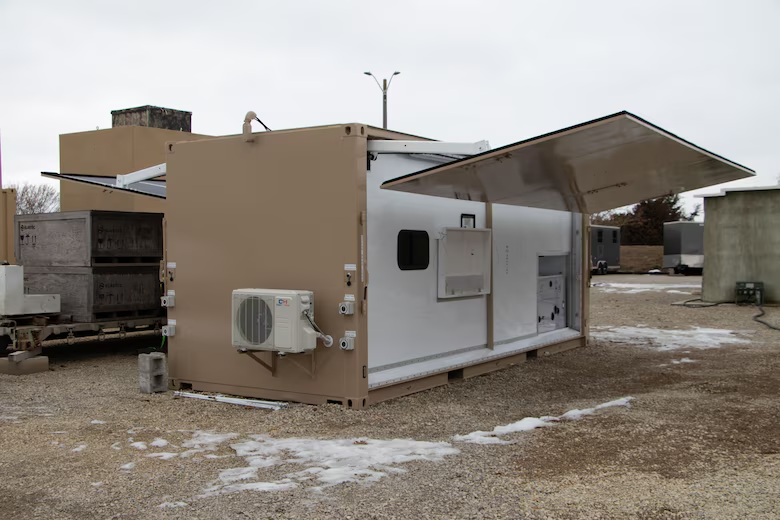
ERDC is advancing Army readiness through the deployment of a resilient, off-grid energy node at its Construction Engineering Research Laboratory. Developed in collaboration with Sesame Solar, the system integrates solar power, hydrogen fuel cells, battery storage, and water generation to deliver reliable energy anywhere it is needed. Designed for real-world conditions, the energy node supports research, training, and future operational capabilities while reducing dependence on traditional fuel supply chains.
CHAMPAIGN, Ill. – A small, self-contained electric power system unit called an “energy node” has been installed at the U.S. Army Engineer Research and Development Center (ERDC)’s Construction Engineering Research Laboratory (CERL) to facilitate further research towards fulfilling the U.S. Army’s requirement for reliable and resilient energy to power the mission.
Developed with the support of industry collaborator Sesame Solar, the energy node combines the capabilities of photovoltaic (PV) panels with a hydrogen fuel cell to provide off-grid and on-demand power that can provide energy for forward operating bases or power for disaster response efforts.
Resilient power systems are one way that ERDC demonstrates innovative energy technologies to increase lethality. Generating electric power through PV technology with a fuel cell will enable the Army to fuel missions with truly resilient energy, as the fuel can be made in any environment, anywhere in the world.
The energy node represents the latest innovation in a series of technology developments showcasing hydrogen and fuel cells within CERL’s energy research portfolio, developed over the last few years. One notable milestone was a demonstration of a similar energy node at White Sand Missile Range in December 2024. The ruggedized unit installed at White Sands has been providing power up to a 9-kilowatt load for perimeter security sensors and weather monitoring. Coupling hydrogen storage and battery storage, the unit also collects real-time data through a Starlink system and validates the possibility of long-term, unattended operation.
Using a similar suite of system components, the energy node installed at CERL has fully deployable PV panels, a hydrogen fuel cell, an electrolyzer, battery energy storage, inverter and hydrogen fuel storage to reduce the need for liquid fuels. An atmospheric water generator is also included in the unit to provide potable water.
Current near-term efforts focus on using the energy node as a training lab for multifaceted resiliency methods and technologies, preparing it for deployment to the operational environment. Longer term, the node is expected to support emerging capabilities, such as refueling hydrogen-powered robots and drones. Opportunities for this unit and the wider project continue to evolve rapidly.
“We are working to free our Warfighters from needing to plug into the grid or worry about running out of power for critical operations,” said Carol Bailey, senior energy project manager at CERL. “This technology enables us and our mission to move forward anywhere in the world with reliable power and resilient energy.”
Industry collaboration is critical for a rapid field deployment of these technologies and keeps ERDC on the cutting edge of innovative energy research. For this hydrogen research project, the project team sought industry collaborators who could integrate the elements needed to build the node itself. Sesame Solar, a company that engineers self-generating, off-grid, and deployable mobile power systems, enabled a quick fabrication time for the technology that positions ERDC to further the research on hydrogen and fuel cells deployed in real-world conditions.
The energy node will be in good company at its home on the ERDC Forward Operating Base Laboratory (EFOB-L) at CERL — a facility for research and development of technologies such as automated construction, hybrid and resilient power systems, and water reuse systems for the operational environment. These complementary technologies further Army modernization efforts to achieve mission success. While representing only a portion of CERL’s broader mission to collaboratively discover, develop, deliver and sustain trusted engineering solutions for the Warfighter and the Nation’s built and natural infrastructure, these technologies sit at the forefront of resilient energy research and development for the Army.
Key Takeaways
- Resilient, off-grid power for Army missions: ERDC installed a self-contained energy node at CERL to support research into reliable, deployable power for forward operating bases and disaster response scenarios.
- Integrated solar and hydrogen system: The energy node combines photovoltaic panels, hydrogen fuel cells, battery storage, and an electrolyzer to reduce reliance on liquid fuels and grid connectivity.
- Built for real-world operations: Similar systems have already demonstrated sustained, unattended operation at White Sands Missile Range, powering perimeter security and monitoring systems.
- Future-ready capabilities: Beyond power generation, the node is being prepared to support emerging needs such as refueling hydrogen-powered robots and drones.
- Industry collaboration accelerates innovation: Sesame Solar’s role enabled rapid fabrication and deployment, helping ERDC advance applied research in resilient energy systems.
